Worldwide · 206 countries tracked
Wealth Tax
Wealth tax is a tax charged on a person’s net wealth — broadly, the value of their assets minus their debts — rather than on income or a single transaction. Very few countries levy one today, and some that did in past decades have since repealed it.
Where a wealth tax exists, its rate, its base (which assets count, and at what valuation) and its exemption threshold vary sharply by country, which makes a single headline percentage a poor summary on its own. We publish a rate only once we can verify it, and the details around it, against a primary source. Property, inheritance and estate taxes are not counted as a wealth tax here, even where a country’s own vocabulary calls them one — this page tracks recurring taxes on total net wealth specifically.
We have verified wealth tax status for 193 countries: 182 currently levy no net wealth tax, and 11 levy one, from 0.1% up to 3.5%. See the full ranking for the complete list of countries that do.
- Countries with data
- 193
- World average
- 0.1%
- Highest rate
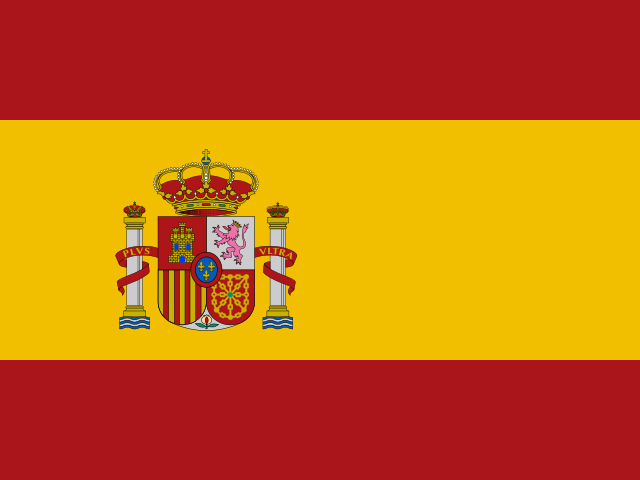
- 3.5%Spain
- Zero-rate countries
- 182
Wealth Tax rates, ranked
| Rank | Country | Rate | As of |
|---|---|---|---|
| 1 | Spain | 3.5% | 2025 |
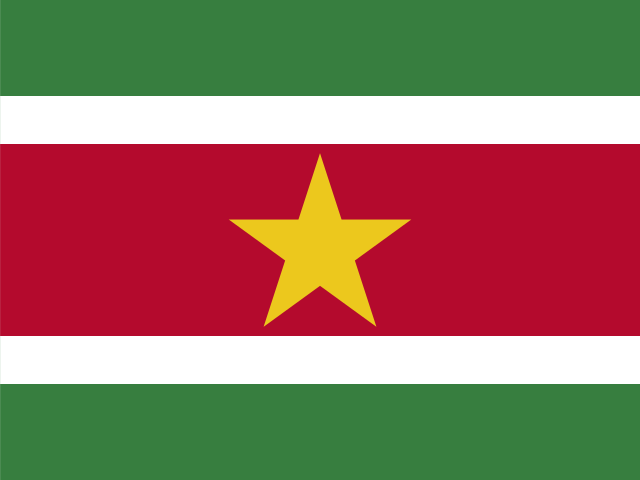
| 2 | Suriname | 3% | 2024 |
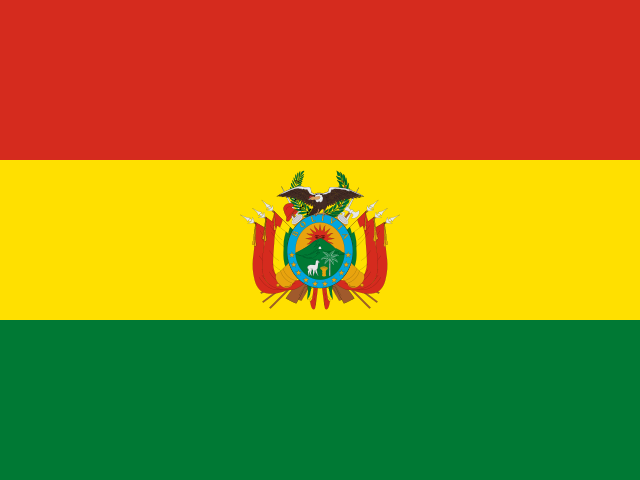
| 3 | Bolivia | 2.4% | 2026 |
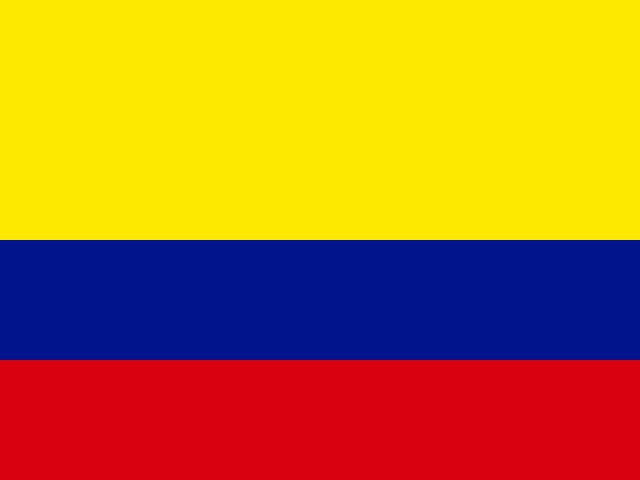
| 4 | Colombia | 1.5% | 2026 |
| 5 | Norway | 1.1% | 2026 |
| 6 | Algeria | 1% | 2026 |
| 7 | Argentina | 1% | 2025 |
| 8 | Tunisia | 1% | 2026 |
| 9 | Switzerland | 0.9% | 2025 |
| 10 | Venezuela | 0.3% | 2026 |
| 11 | Uruguay | 0.1% | 2025 |
Frequently asked questions
What counts as wealth for a wealth tax?
Definitions vary by country, but a wealth tax base typically includes financial assets, real estate and other property, minus debts owed, valued as of a specific date each year. Some countries exclude a primary residence or business assets, in whole or in part.
How is wealth tax different from property tax?
Property tax is charged on real estate alone, usually by a local government. A wealth tax, where one exists, is charged on a person’s total net wealth across asset types, typically by the national government.
Do most countries have a wealth tax?
No. Of the 193 countries we've verified, only 11 levy a general annual net wealth tax on individuals; the rest currently levy none. Several countries that had one in past decades — among them Germany, France, Iceland and Luxembourg — have since suspended, narrowed or abolished theirs. This page reports current, source-verified law rather than the reasoning behind past policy changes.
Why do some countries with a "wealth tax" in the news show no rate here?
A number of taxes are colloquially called a wealth tax without meeting this page’s definition: a tax on only one asset class (such as securities accounts or foreign-held property), a tax on a deemed or notional return on assets rather than the assets themselves, or a tax reaching only real estate. This page counts only a recurring tax on an individual’s total net wealth — see each country’s own page for how its specific regime is sourced and explained.
Is this list of wealth-tax countries complete?
As complete as source verification allows: every one of the 206 countries this site tracks has been checked, though a small number — 13 — couldn't be confirmed against a source that meets this site's bar, and are omitted rather than guessed. A country not levying a wealth tax today could still introduce one, or vice versa — we'll update this page once a change is verified against a primary source.